Photographs of Feng Xinggang

About This Project
The inspiration for this project comes from the digital scanning of film. After shooting film, in addition to traditional darkroom enlargements, I also use a scanner to digitize the negatives and preserve them as data. This process is known as converting an analog signal into a digital signal. While today’s digitization technologies are highly advanced-my scanned files can already match the resolution limit of silver halide grains-they are still only a sampling of the world, and the resulting files remain just that: immutable digital data, unchanging and ageless.
So I began to wonder: what if I were to convert a digital signal back into an analog signal? I thought of a computer amplifier-how does it transform jagged digital lines into smooth curves? The answer is that it adds noise. These meaningless signals fill in the gaps of the original digital signals, making them appear smoother and, subjectively, “clearer.”
Until now, I have always converted a real film image into a digital signal. This time, however, I planned to do the opposite: to turn a digital signal into a tangible photograph. For that digital source, I chose video game imagery.
Unlike digital photographs or scanned files, which are samples of the physical world, video game visuals exist as purely digital creations within a numerical environment. The next step is to explore how to transform them into the “curves” of an analog signal.

Afterword
This was a relatively short project. Its core lies in the noise required when converting from digital to analog-a step that is never undertaken in the making of other photographs.
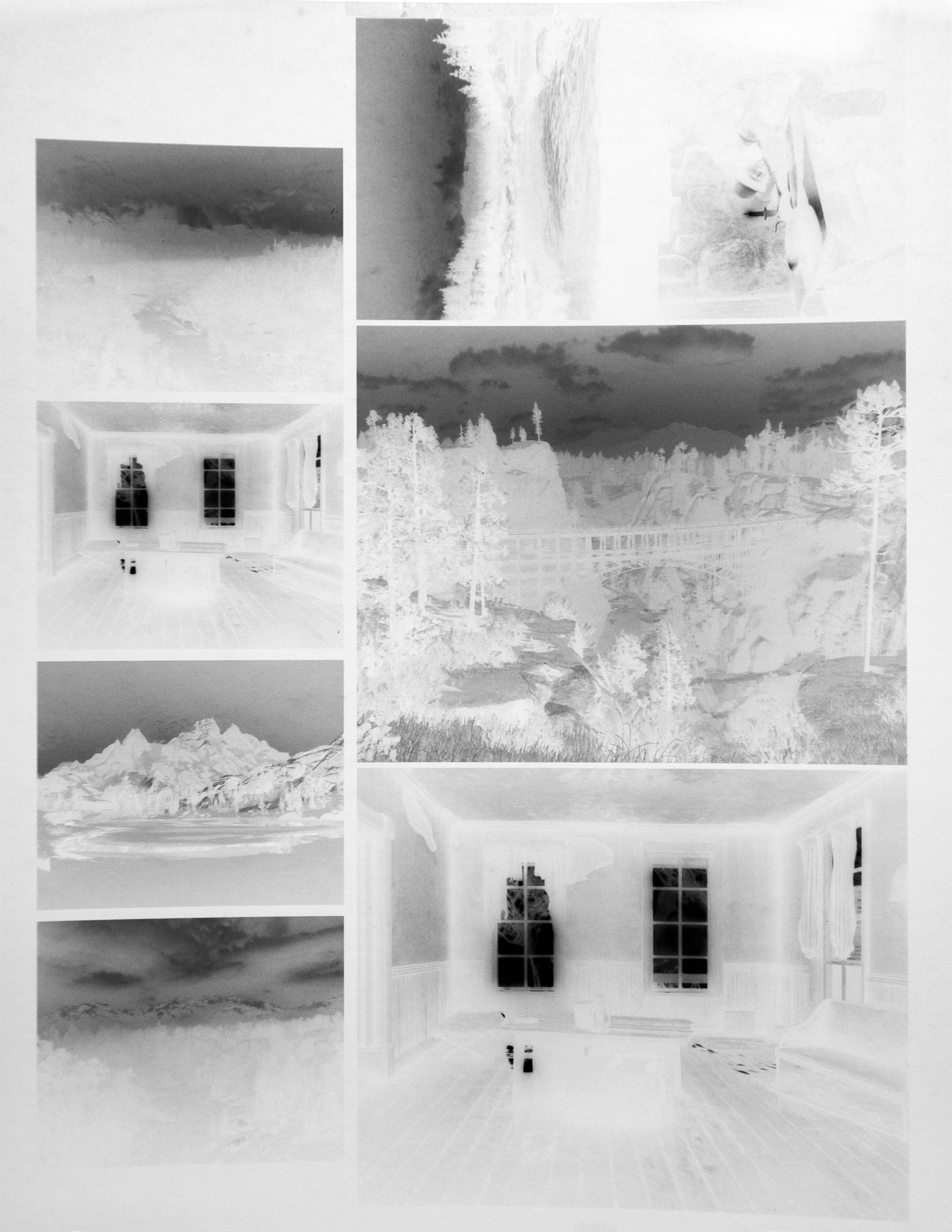
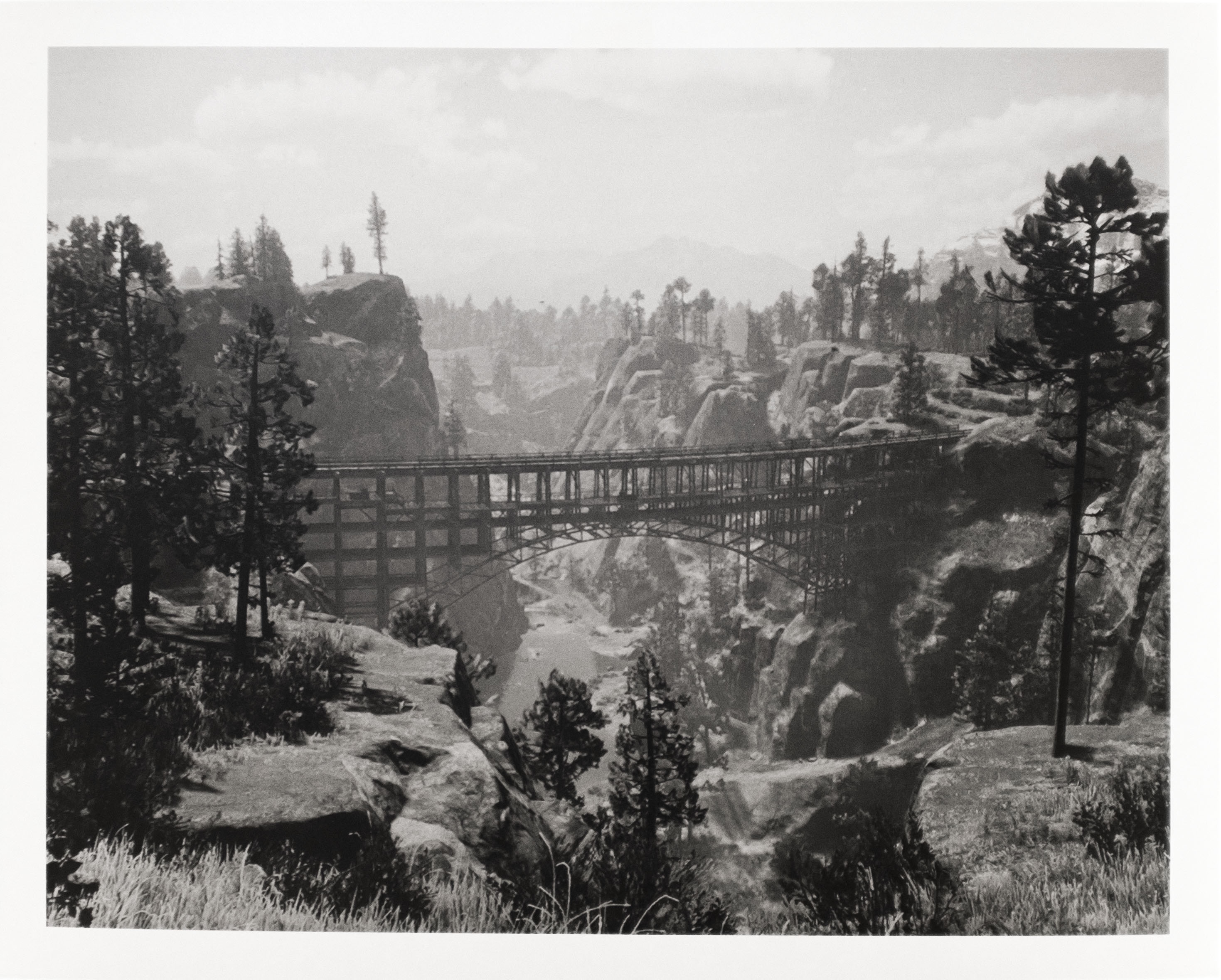
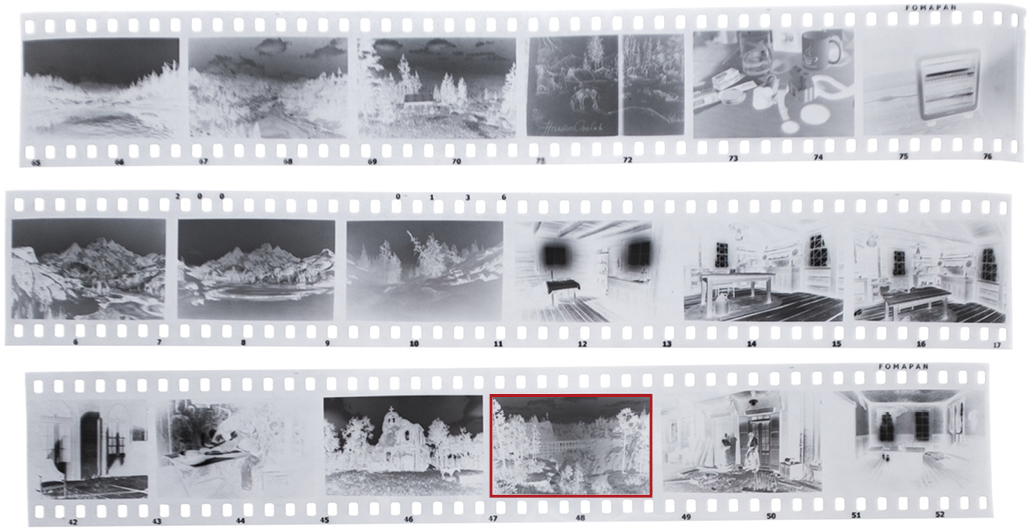
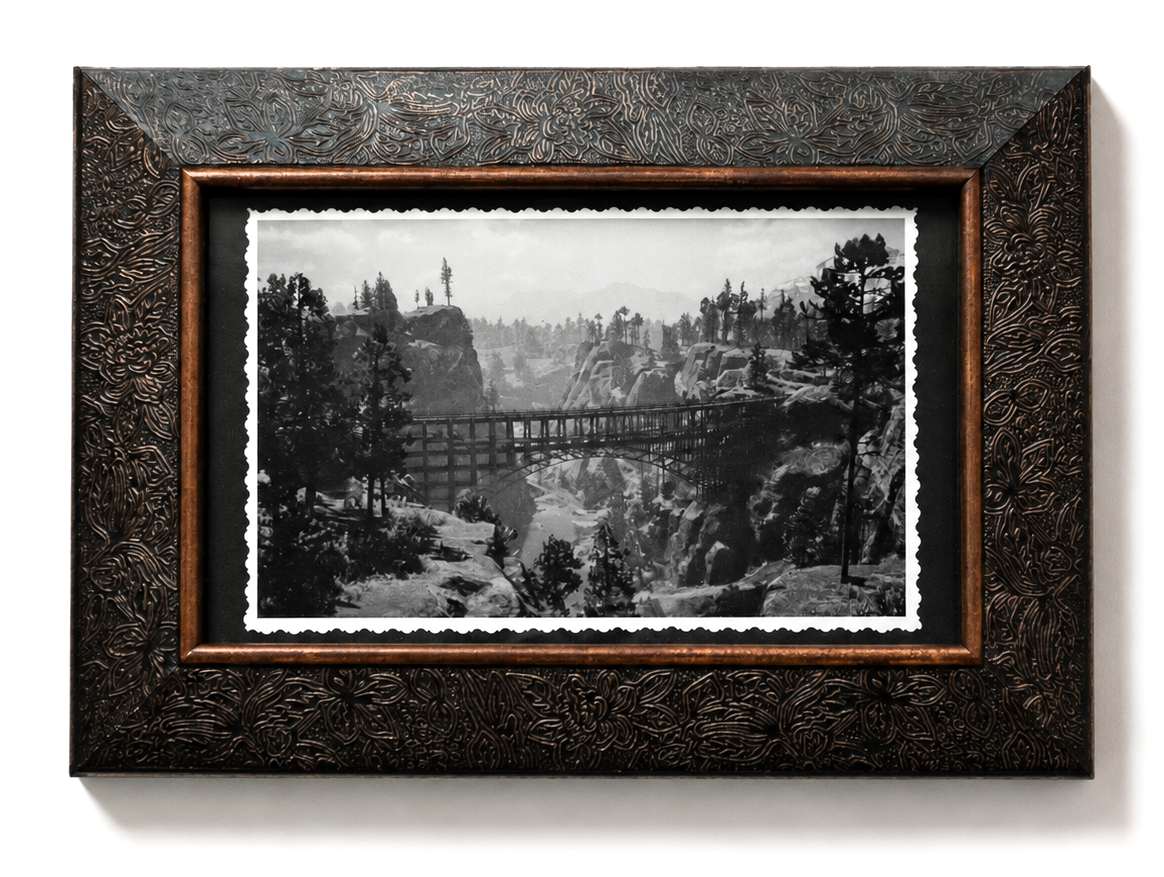
In the end, I used a process of digital intermediate negative output → projection → photographing the projected image with 35mm film → darkroom enlargement → final mounting. Dust during projection, the grain of the 35mm film, the depth of field of the enlarger lens, and the silver halide on the photographic paper all combined to add large amounts of data not present in the original digital signal. And because there were enough steps, plenty of noise was inevitably introduced along the way.
By the final stage, the jagged edges of the original screenshot had almost entirely disappeared. This randomness, incapable of being mass-produced, is the very key to transforming a digital signal.